The Physics of Handwear: Gloves vs. Mittens (Tummantlar)
Five-finger gloves isolate each finger within separate cylinders of fabric, substantially multiplying the garment's surface area exposed to freezing winds. In sub-zero weather below -10°C, individual fingers lack sufficient mass to generate and sustain heat in isolation.
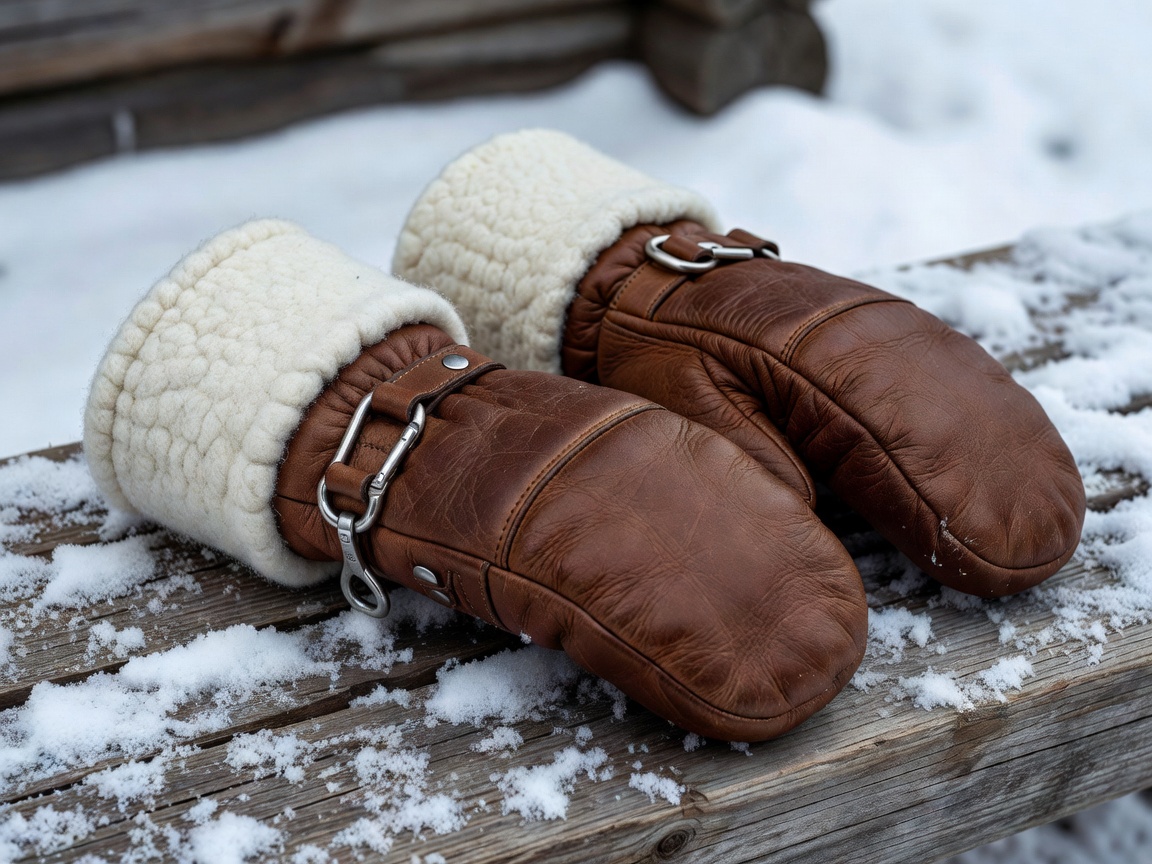
Swedish winter explorers and Sámi herdsmen rely on tummantlar (mittens). By housing the four fingers together in a shared microclimate, the digits continuously share radiated warmth. For tasks requiring precision dexterity (such as handling camp stoves, cameras, or keys), a two-tier layering approach is employed:
- Contact Glove Liner: Thin 100% merino wool or touchscreen-compatible synthetic glove (150 GSM) worn continuously next to skin.
- Heavy Shell Mitten: Rugged proofed cowhide, deerskin, or polyamide outer shell lined with removable shearling sheepskin or thick wool pile.
Headwear Architecture: The Swedish Mössa
The human scalp is densely vascularized and does not constrict blood vessels as aggressively as the hands or feet. Consequently, an uncovered head can account for significant metabolic thermal leakage.
A quality winter mössa (beanie) must combine acoustic transparency with windproof ear flaps. Premium Scandinavian headwear incorporates a dual-layer build:
| Headwear Style | Primary Material | Wind Resistance | Best Environmental Usage |
|---|---|---|---|
| Ribbed Fisherman Beanie | 100% Pure Virgin Shetland or Merino Wool | Moderate (Air-permeable) | Urban street wear, active cross-country skiing |
| Trapper Cap (Björnfitta style) | Waxed Canvas with Faux Fur or Shearling Flaps | High (Complete ear & cheek barrier) | Sub-zero stationary watches, open boat travel, blizzards |
| Technical Windstopper Beanie | Merino outer with ePTFE membrane headband | 100% (Blocks 40 knot gales) | High mountain ascents, maritime winter winds |
Protecting the Respiratory Zone: Neck Gaiters & Balaclavas
Standard knitted wool scarves unravel easily in heavy winds and leave the cervical vertebrae exposed. Modern Scandinavian winter practice strongly favors seamless circular neck gaiters (halskragar).
A 250 GSM merino wool neck gaiter can be pulled up to cover the chin, mouth, and nasal bridge during headwinds. As breath passes through the wool fibers, the fabric warms the inhaled air, preventing bronchospasms induced by breathing sub-zero air. On exposed arctic treks, full hinged balaclavas integrate directly beneath snow goggles, eliminating any strip of bare flesh between the beanie, goggle frame, and jacket collar.
Care and Conditioning of Winter Leather Gloves
Nordic leather mittens constructed from Scandinavian elk, deer, or goat hide require regular treatment to resist slush and remain supple. If wet leather dries too quickly near a radiator or open flame, the natural oils bake out, leaving the collagen fibers brittle and cracked.
Ready to Configure Your Cold-Weather System?
Whether you are outfitting for a winter expedition to Swedish Lapland or navigating coastal Stockholm frosts, our team can assist with precise layering configurations.