The Three Primary Winter Pant Classifications
Swedish winter activities dictate three fundamentally different lower-body configurations. Using the incorrect category results in either overheating during exertion or dangerous chill while stationary:
- Waxed Poly-Cotton Trekking Pants (Lined or Unlined): Composed of heavy 65% polyester and 35% cotton weave. Unlined versions worn over 200 GSM merino leggings provide extreme breathability and mechanical protection against birch branches and sharp crampons. Lined versions feature thin brushed mesh or fleece cores.
- Hardshell Waterproof Bibs (3-Layer Membrane): Engineered with waterproof microporous membranes and high waist bibs with integrated suspenders. Designed for heavy wet snow storms, sea ice crossing, and alpine touring where moisture penetration must be zero.
- Insulated Padded Overpants: Filled with 80 to 140 g/m² synthetic insulation with full-length two-way side zips. These are packed in sleds or rucksacks and pulled on over normal boots and trousers during rests, camp setup, or prolonged snowmobile travel.
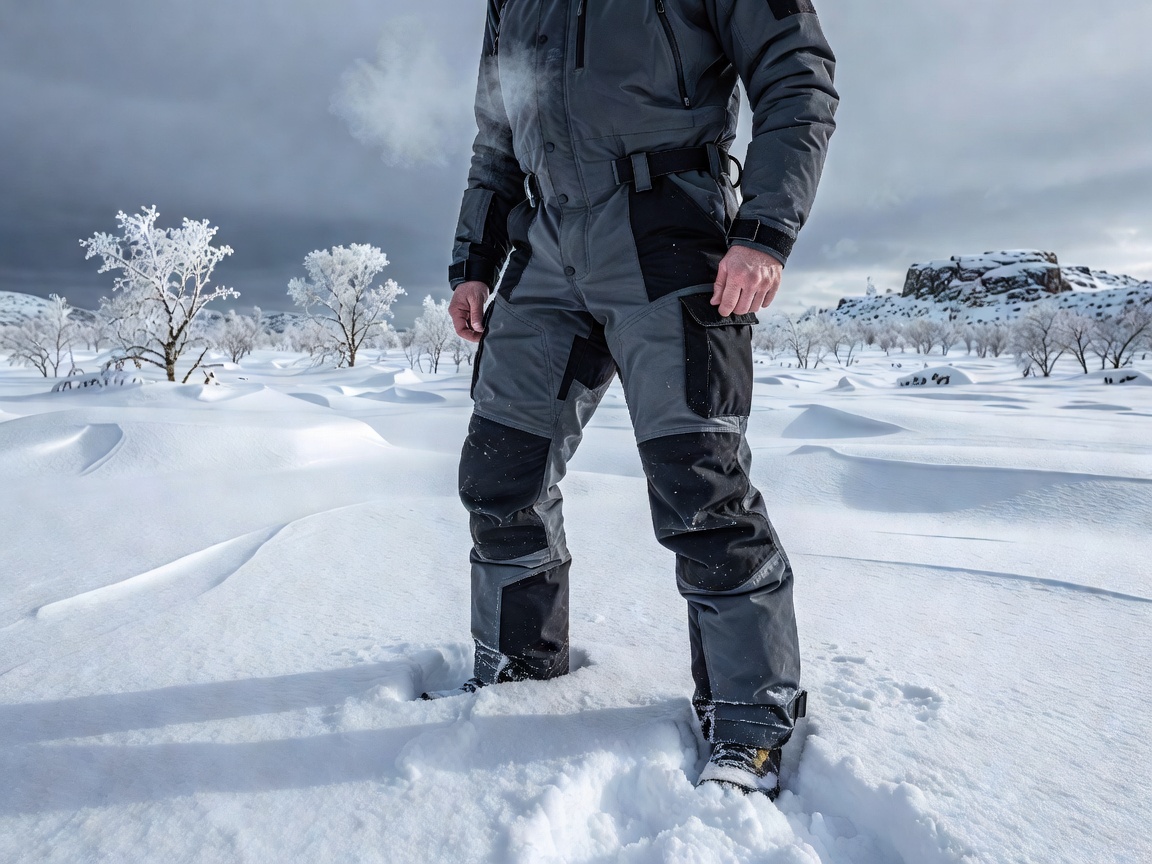
Key Mechanical Features for Sub-Zero Performance
When evaluating cold-weather trousers for Swedish terrain, standard casual pants or denim are entirely unsuitable. True winter trousers feature specialized construction details:
- Cordura® Kick Patches: The interior lower ankles endure constant friction from heavy boot buckles and sharp metal snowshoe frames. High-denier nylon reinforcements prevent tears.
- Integrated Boot Gaiters & Lace Hooks: A built-in elastic inner cuff that snaps tightly around the boot collar, coupled with a forward-facing metal hook that latches onto footwear laces, prevents powdery snow from driving upwards into the sock line.
- Full-Length or Thigh Ventilation Zippers: Climbing uphill generates immense kinetic thermal energy. Double-slider side vents backed by mesh allow heat dissipation without snow entering the trouser leg.
- Pre-shaped Articulated Knees: Additional pleating at the knee joint ensures the fabric does not pull tight against the patella during deep steps, which would compress insulation and create conductive cold spots.
Comparative Specification Breakdown
| Trouser Attribute | Waxed Canvas Trekker | Expedition Thermal Bib |
|---|---|---|
| Primary Material | G-1000 / Poly-Cotton Blend | 70D Recycled Nylon 3-Layer Shell |
| Insulation Type | Unlined (Pair with Merino) | 100g PrimaLoft® or Core Padding |
| Wind Resistance | 90% (Customizable via Greenland Wax) | 100% Windproof Membrane |
| Breathability Rating | Exceptional (High vapor transit) | Moderate (Dependent on side vents) |
| Cold Rating | Down to -20°C (Layered) | Down to -40°C (Active or Static) |
Bib vs. Regular Waistband: The Scandinavian Verdict
For urban winter conditions in Stockholm or Uppsala, regular waistbands with sturdy leather belts suffice. However, in any setting north of Dalarna or during active winter sports, high-waisted bibs with elastic suspenders offer immense advantages.
When bending over to adjust ski bindings, pitch a tent in gale conditions, or chop kindling, ordinary trousers inevitably sag, exposing the lumbar region and kidneys to freezing drafts. A bib design extends insulation well past the beltline, overlapping with the parka's snow skirt to form an impenetrable seal against wind and blowing drifts.
Next in the System
Preventing conductive ground chill is the next crucial step. Explore heavy-duty snow footwear and lug geometries: