Down Fill Power Versus Synthetic Baffle Architecture
When traversing Swedish landscapes during polar nights, insulating efficiency depends on thermal density and moisture resilience. Fill power represents the volume in cubic inches that one ounce of down occupies under laboratory testing conditions. In Scandinavian climates, down jacket designs typically fall into two categories:
- 700–850 Fill Power Goose Down: Offers an unmatched warmth-to-weight ratio and compresses tightly for long expeditions. However, untreated down collapses immediately upon contact with moisture, eliminating air retention.
- Hydrophobic Down & Synthetic Microfiber Fill: Blends silicone-treated clusters or hollow polyester filaments that resist saturated coastal snowfall, drying significantly faster than standard plumage.
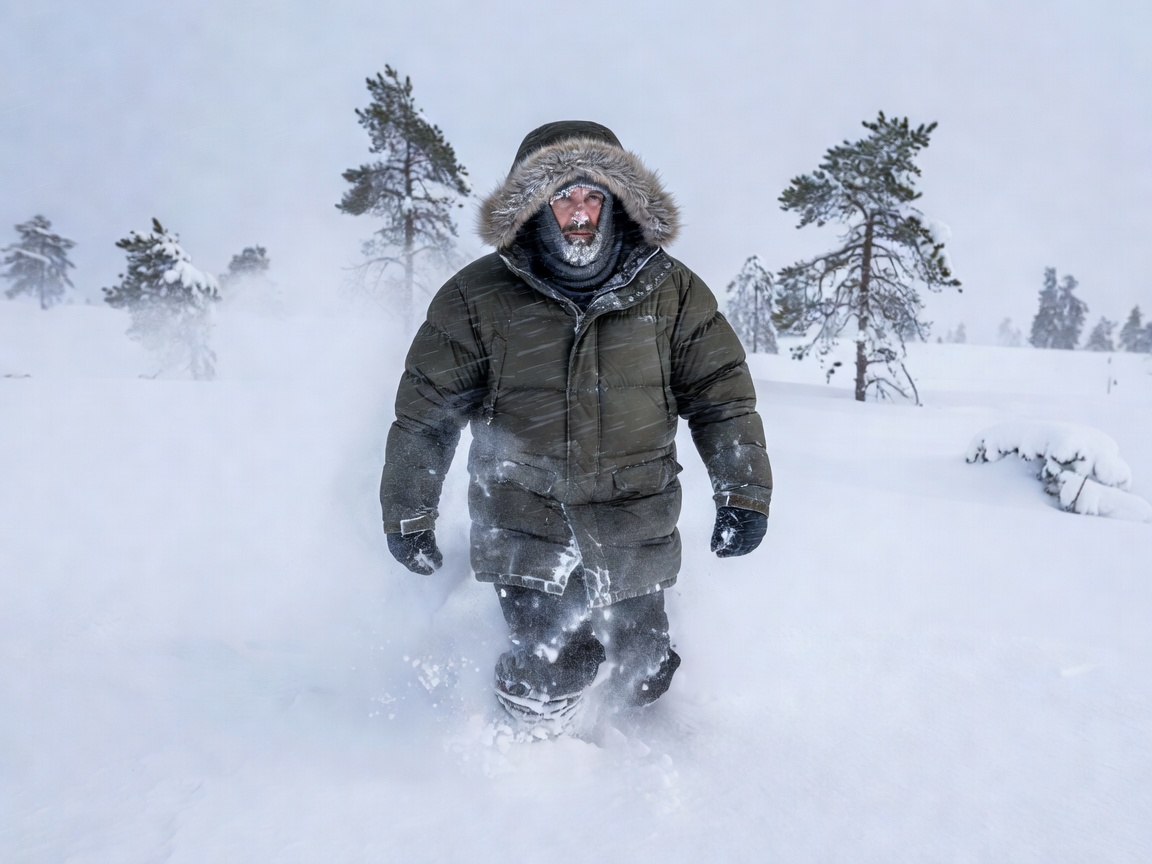
For dry interior cold, such as in Östersund or Kiruna where winter air holds negligible humidity, high fill-power goose down performs best. In coastal regions like Gothenburg or Malmö, where wet snow and freezing sea fog predominate, heavy-duty synthetic parkas or waxed poly-cotton shells over down cores provide superior durability.
Construction Standards: Box-Wall Baffles vs. Stitch-Through
A common engineering compromise found in lightweight winter jackets is stitch-through quilting. This method joins the inner lining and outer shell directly with thread, creating microscopic punctures and uninsulated pinch points where heat escapes rapidly.
Authentic Swedish arctic parkas utilize box-wall construction. Vertical fabric walls separate the shell and liner, establishing three-dimensional cubical chambers that permit the down to expand uniformly without pinched seamlines. This eliminates cold spots across the shoulders, back, and torso.
Technical Specification Matrix
| Design Feature | Urban Scandinavian Use | Polar Expedition Standard |
|---|---|---|
| Insulation Fill | 550–650 FP Down or High-Loft Poly | 800+ FP Hydrophobic Goose Down |
| Chamber Design | Reinforced Stitch-Through | Offset Double Box-Wall Baffles |
| Outer Shell Fabric | Polyurethane Coated Polyester | Waxed Poly-Cotton (G-1000 type) or 3-ply Nylon |
| Hood Structure | Standard Detachable Hood | Deep Tunnel Hood with Wire Stiffener & Faux Ruffle |
| Temperature Range | -5°C to -15°C | -20°C to -40°C |
Pros & Cons: Choosing Your Parka Shell
Waxed Poly-Cotton Shells
- Silent fabric movement in sub-zero silence
- Extreme resistance to sparks from wood campfires
- Re-waxable for customizable wind and moisture resistance
- Exceptional abrasion resistance against rough ice
Synthetic Membrane Shells
- Fabric can stiffen and crinkle loudly below -25°C
- Susceptible to melt holes from embers
- Requires periodic detergent recoating for DWR revival
- Higher initial acquisition cost
Hood Architecture and Storm Seal Integration
Swedish blizzards deliver sharp horizontal ice pellets. A functional parka hood must form an extended tunnel extending at least 8 to 10 centimeters forward from the facial plane. This dead-air buffer warms incoming ambient air before it reaches cheek tissues. Moldable brass or aluminum wire hems allow users to adjust the hood aperture against shifting headwinds while wearing bulky thermal mittens.
Furthermore, heavy two-way two-slider front brass or Vislon zippers are non-negotiable. They enable lower-vent ventilation when climbing steep hills or boarding public transit without exposing the entire chest to winter drafts.
Related Scandinavian Layers
A heavy parka cannot function effectively over bare cotton shirts. Discover the moisture-wicking foundation in our next guide: